
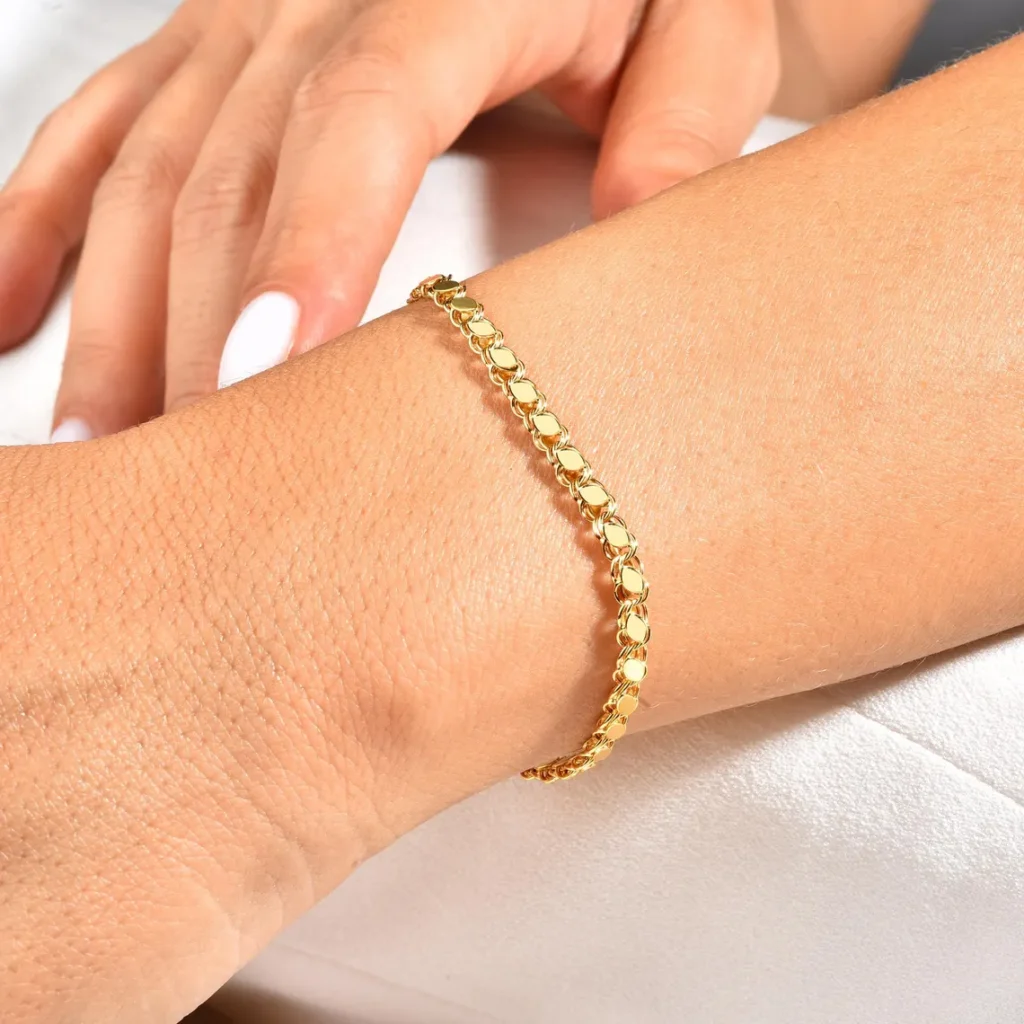
For a long time there was an unspoken rule that your jewelry had to match — yellow gold with yellow gold, white with white, and rose gold usually left out of the conversation entirely. I followed it for years without questioning it, mostly because it was easier than thinking about it.
Then at some point I put on a yellow gold chain and a rose gold ring at the same time, mostly by accident, and realized nothing bad happened. It just looked like two things I liked, worn together.
That’s really the shift that’s happened in how people wear jewelry now. Mixing metals isn’t a mistake to correct anymore — it’s closer to how people already dress. Nobody insists their belt matches their bag exactly, and jewelry has started to follow the same logic.
A few things do make it look intentional rather than accidental. Keeping one metal as the “majority” — say, mostly yellow gold with one rose gold accent piece — reads more deliberate than a perfectly even split. Repeating a stone or a texture across the mixed pieces helps tie them together too, even if the metals themselves are different.
The other thing worth saying: gold that’s actually solid mixes better than plated pieces, simply because the tones read as true rather than slightly off from each other. It’s a small detail, but it’s the difference between a stack looking curated and looking like it happened by accident twice.
So if you’ve got pieces in more than one gold tone sitting in separate boxes because you were told they don’t go together — they probably do. Try it before you rule it out.
