
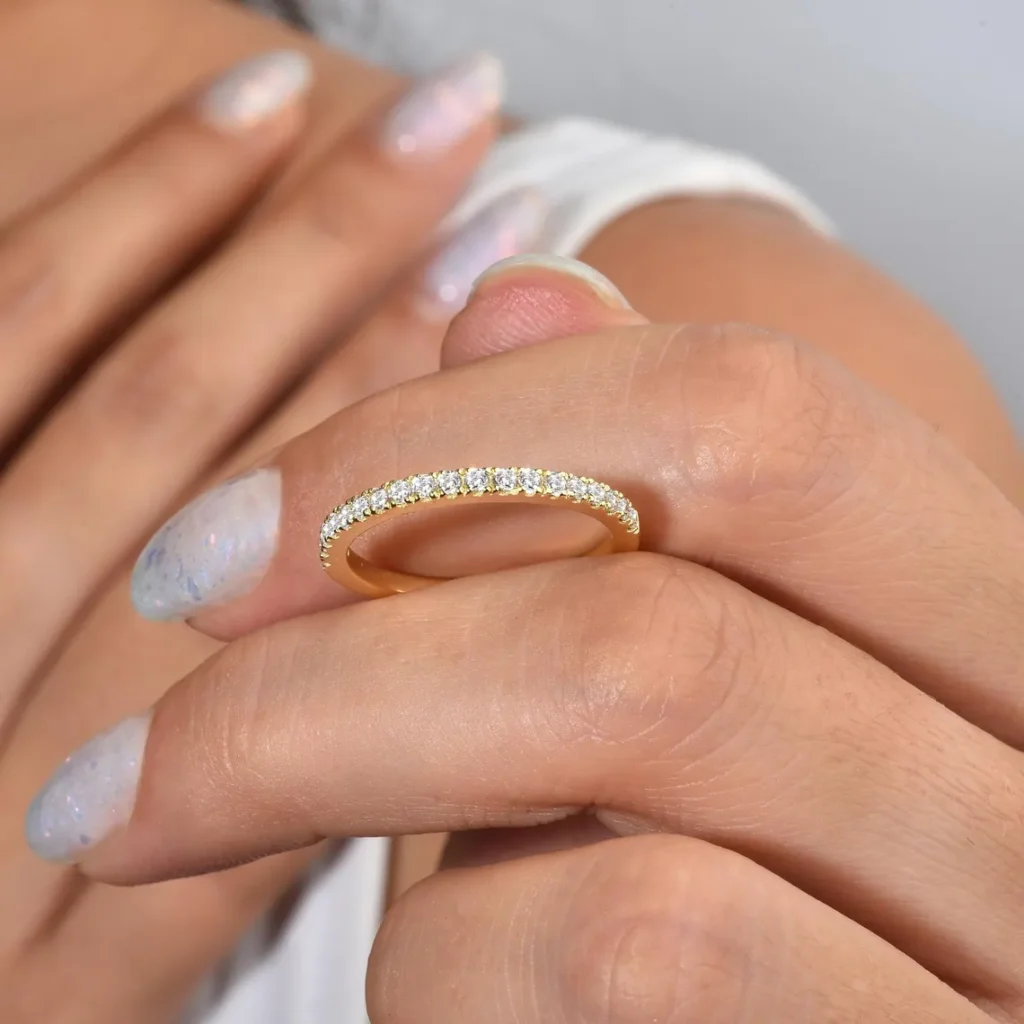
The engagement ring is one of the few pieces of jewelry most people will only ever buy once, which is a strange amount of pressure to put on a single object. So I like knowing where the tradition actually came from — it takes some of that pressure off.
The habit of giving a ring to mark a promise goes back to Ancient Rome, where rings were exchanged as a kind of legal and social contract rather than a romantic gesture. The diamond part came much later — the first recorded diamond engagement ring dates to 1477, when Archduke Maximilian of Austria gave one to Mary of Burgundy. For centuries after that, it stayed a habit mostly reserved for royalty and the very wealthy, simply because diamonds were rare and mining was limited to a few regions.
What changed it wasn’t romance — it was supply. Large diamond deposits found in South Africa in the late 1800s made the stone far more available, and a very effective ad campaign in the 20th century did the rest, turning “a diamond is forever” into something close to an unwritten rule.
Knowing that history is oddly freeing. The ring doesn’t have to look a certain way because it always has — the “always” is younger than most people assume. A thin gold band, a colored stone, something inherited and reset: all of it sits inside the same tradition, just an older and quieter part of it.
If you’re choosing one right now, that’s worth remembering. The only real rule is that it’s the one you’ll want to see on your hand every day — everything else is just habit.
